11  Immunotherapy in AML

11.1 Limitations of AML immunotherapy

  • One of the limitations to using antigen specific immunotherapies for AML is the concern that due to the shared surface antigen profile of AML cells and hematopoietic stem cells, targeting AML cells can lead to myeloablation –> significant risks for on-target off-tumor toxicity.

11.2 Anti-Galectin-9 antibody

  • Galectin-9 (Gal-9), a β-galactoside-binding protein, has been shown to induce T-cell death and facilitate immunosuppression in the tumor microenvironment by binding to immunomodulatory receptors such as T-cell immunoglobulin and mucin domain–containing molecule 3 and the innate immune receptor dectin-1, suggesting that it may have potential as a target for cancer immunotherapy.

11.2.1 LYT-200

  • LYT-200 represents a first-in-class antibody targeting galectin-9, which plays a role in both oncogenesis and immunosuppression.

  • The downregulation of LGALS9 (Gal-9) gene and activation of NK and T cell pathways supports the proposed mechanism of action.

  • LYT-200 single agent and LYT-200 plus VEN/HMA

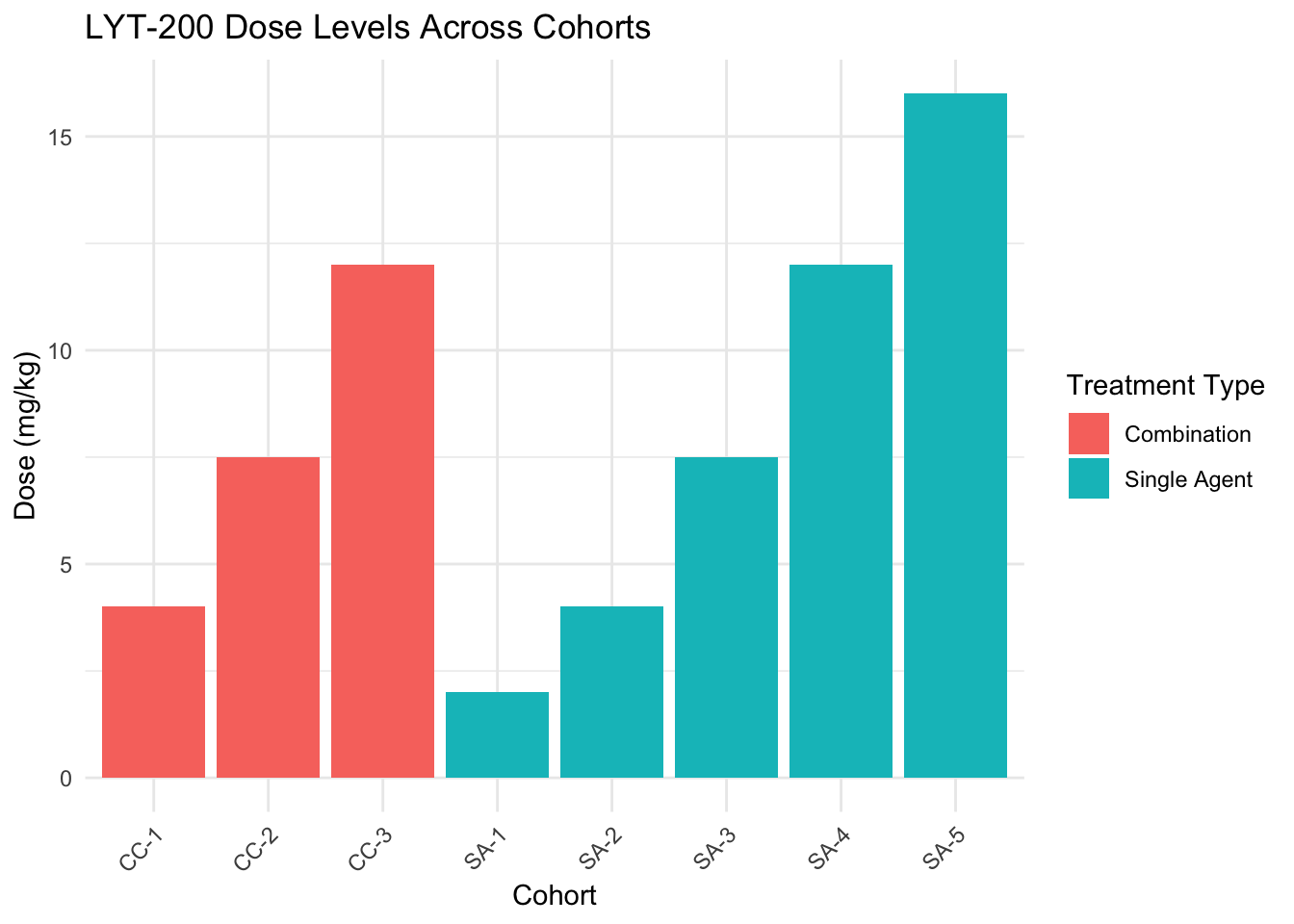
      +  Single-agent cohorts has completed enrollment into all 5 dose levels of LYT-200: 2 mg/kg; 4 mg/kg; **7.5 mg/kg**; 12 mg/kg and 16 mg/kg weekly (QW).
      + YT-200 + VEN/HMA has thus far completed enrollment of 3 cohorts with VEN/HMA administered as SOC and LYT-200 at dose levels of 4 mg/kg, **7.5 mg/kg** and 12 mg/kg. 
  • ASH 2024 abstract Fathi et al. (2024)

  • n=37 ( 2 pts with R/R AML, and 4 pts with R/R high risk MDS received LYT-200 as SA; and 9 pts with R/R AML and 2 pts with R/R high risk MDS received LYT-200 with VEN+HMA)

  • 12 pts (32%) had TP53 mutations, 1 pt (3%) had an IDH2 mutation.

  • Median prior lines of treatment was 3 across SA and CC (range 1-7 for SA and 1-5 for CC).

S/E

  • LYT-200 appears well-tolerated with only one grade 3 infusion-related reaction reported at the 12 mg/kg dose level.

Merits

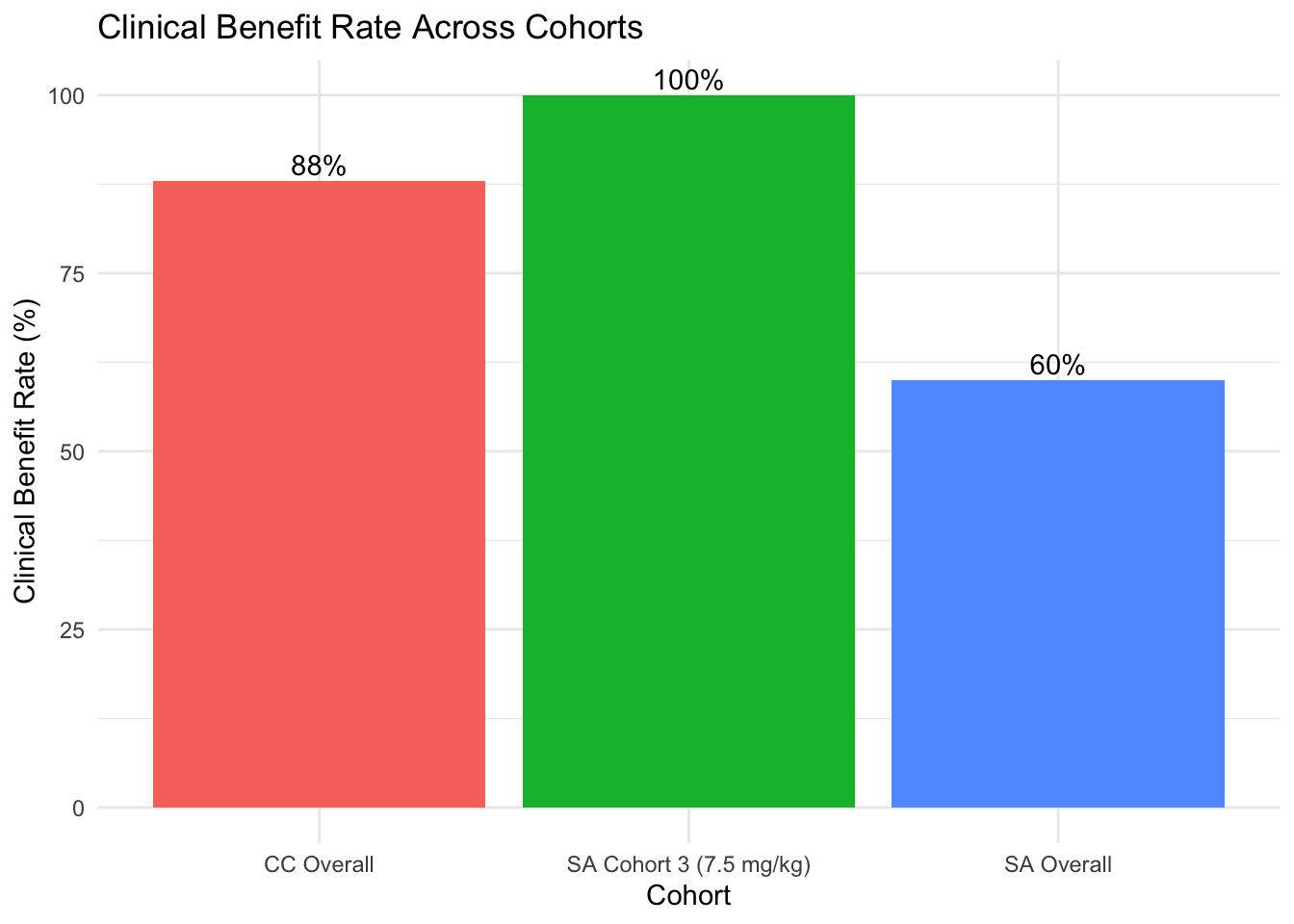
  • The 100% clinical benefit in cohort 3 (7.5 mg/kg) is intriguing, though based on a very small sample.
  • The observation of responses in VEN-refractory patients suggests potential for addressing an unmet need.
── Attaching core tidyverse packages ──────────────────────── tidyverse 2.0.0 ──
✔ dplyr     1.2.1     ✔ readr     2.2.0
✔ forcats   1.0.1     ✔ stringr   1.6.0
✔ ggplot2   4.0.3     ✔ tibble    3.3.1
✔ lubridate 1.9.5     ✔ tidyr     1.3.2
✔ purrr     1.2.2     
── Conflicts ────────────────────────────────────────── tidyverse_conflicts() ──
✖ dplyr::filter() masks stats::filter()
✖ dplyr::lag()    masks stats::lag()
ℹ Use the conflicted package (<http://conflicted.r-lib.org/>) to force all conflicts to become errors

Attaching package: 'gridExtra'


The following object is masked from 'package:dplyr':

    combine

Patient Demographics and Molecular Characteristics
Characteristic Count Percentage
Total Patients 37 100.0
R/R AML (SA) 2 5.4
R/R high-risk MDS (SA) 4 10.8
R/R AML (CC) 9 24.3
R/R high-risk MDS (CC) 2 5.4
Secondary AML 8 21.6
TP53 mutations 12 32.4
IDH2 mutations 1 2.7
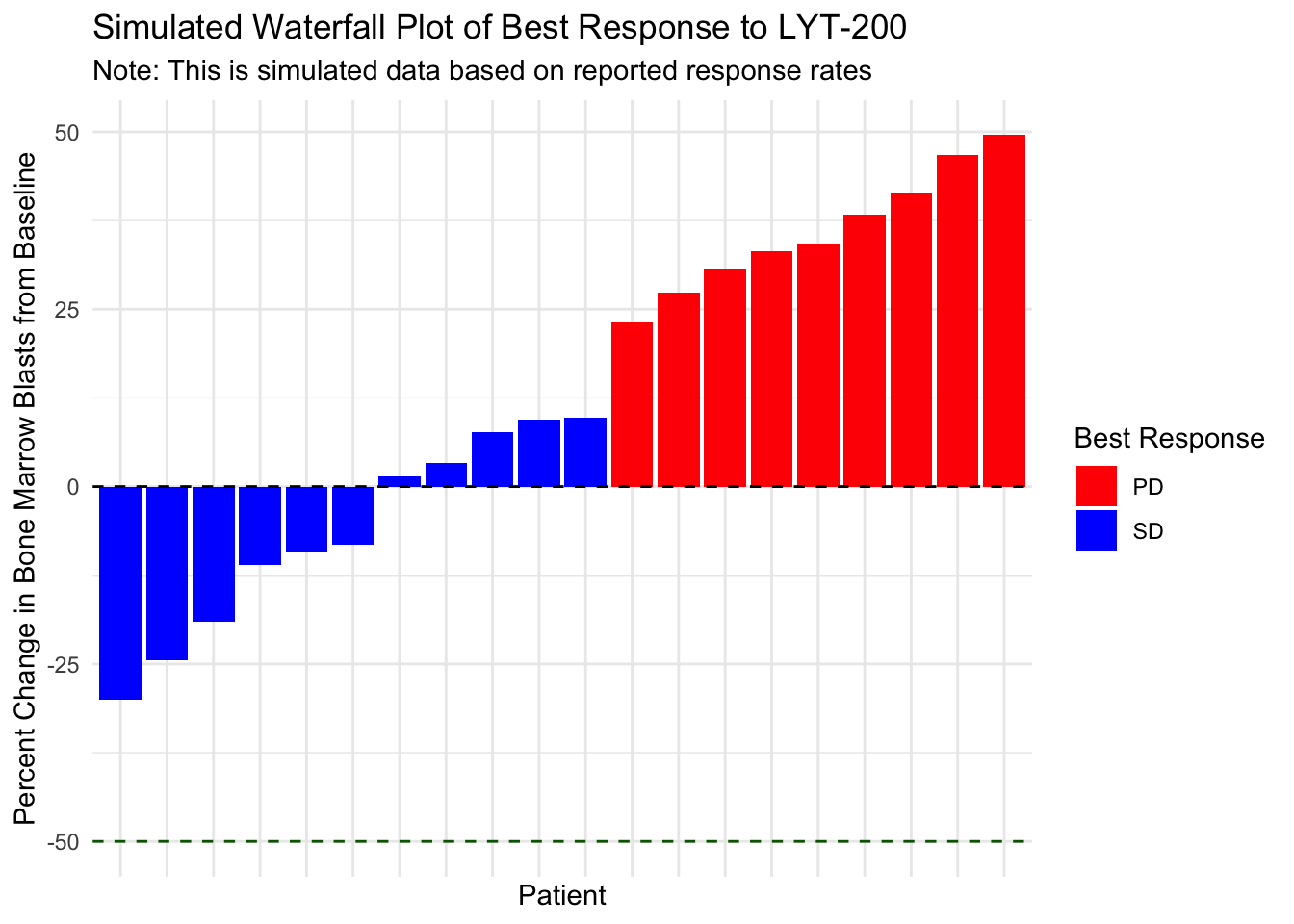
Clinical Responses in Single Agent (SA) Cohorts (n=20)
Response Count Percentage
Partial Response (PR) 2 10
Stable Disease (SD) 10 50
Progressive Disease (PD) 8 40
Clinical Responses in Combination Cohorts (CC) (n=8)
Response Count Percentage
Complete Response with Incomplete Recovery (CRi) 1 12.5
Stable Disease (SD) 6 75.0
Progressive Disease (PD) 1 12.5

Age Distribution by Cohort
Cohort Median_Age Min_Age Max_Age
Single Agent 69 46 83
Combination 74 49 88
Prior Lines of Therapy by Cohort
Cohort Median_Lines Min_Lines Max_Lines
Single Agent 3 1 7
Combination 3 1 5
Pharmacokinetic Parameters
Parameter Value Geometric_CV
Elimination t½ 6.2 days 24.1%
Safety Profile of LYT-200
Event Count Percentage Notes
DLTs 0 0.0 Across all dose levels
Serious Treatment-Related AEs 0 0.0 In both SA and CC cohorts
Grade 3 Infusion Reaction 1 2.7 At 12 mg/kg SA
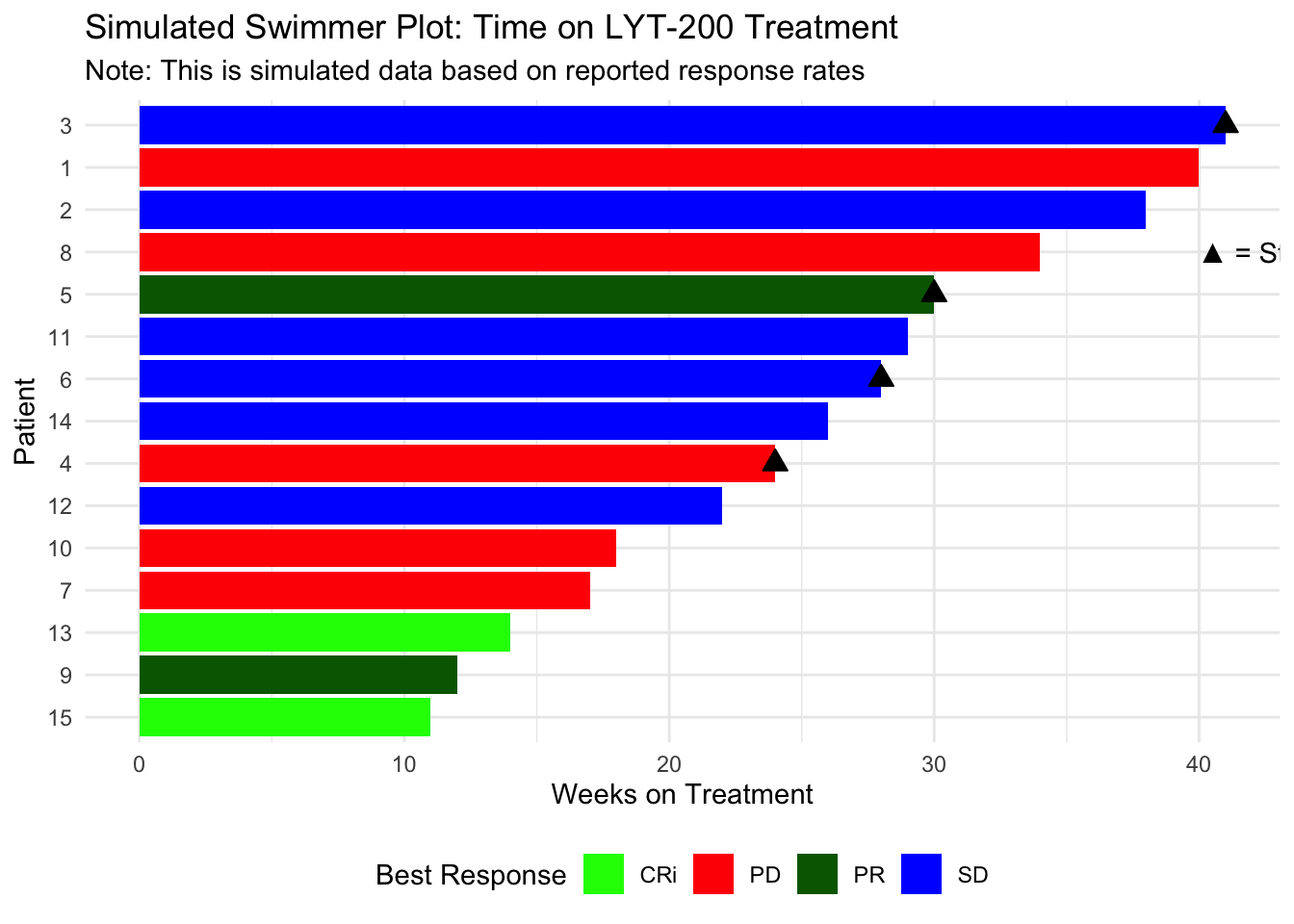
Time on LYT-200 Treatment
Cohort Median_Weeks Range
Single Agent Overall 8.0 4-44
Combination Overall 13.5 4-29

11.3 CBX-250

  • Crossbow Therapeutics: advancing T-Bolt™ therapies, a novel class of antibody therapeutics that mimic T-cell receptors (TCR-mimetics)
  • CBX-250, a first-in-class, potent, and specific T-cell engager (TCE) for the treatment of myeloid leukemia.
  • CBX-250, which targets a cathepsin G (CTSG) peptide-human leukocyte antigen (pHLA) complex.

11.4 TSC-101

  • TScan Therapeutics
  • Engineered T cell therapies that target minor histocompatibility antigens to eliminate residual disease after HSCT.
  • TScan has developed allogeneic donor derived T-cell products TSC-100 and TSC-101, targeting MiHAs HA-1 and HA-2 respectively, both presented on HLA-A*02:01.
  • ASCO 2024 abstract Al Malki et al. (2024)

11.5 Gamma-Delta T-cell Tx

11.5.1 TAK-012, Allo-CAR γδ T-cell Tx (Vδ1+ target for R/R AML), NCT05886491